

Setting up an instant coffee manufacturing plant involves a series of controlled processes such as green coffee bean roasting, grinding, extraction, concentration, spray or freeze drying, agglomeration, and packaging. Key equipment includes coffee roasters, grinders, extractors, evaporators, spray or freeze dryers, agglomerators, conveyors, and automated packaging systems. Since this is a food-grade production facility, maintaining hygiene standards, quality control systems, and compliance with food safety regulations is critical. Additionally, evaluating the instant coffee plant project report is essential for understanding capital investment, machinery requirements, operational efficiency, and long-term profitability in this rapidly growing instant coffee market.
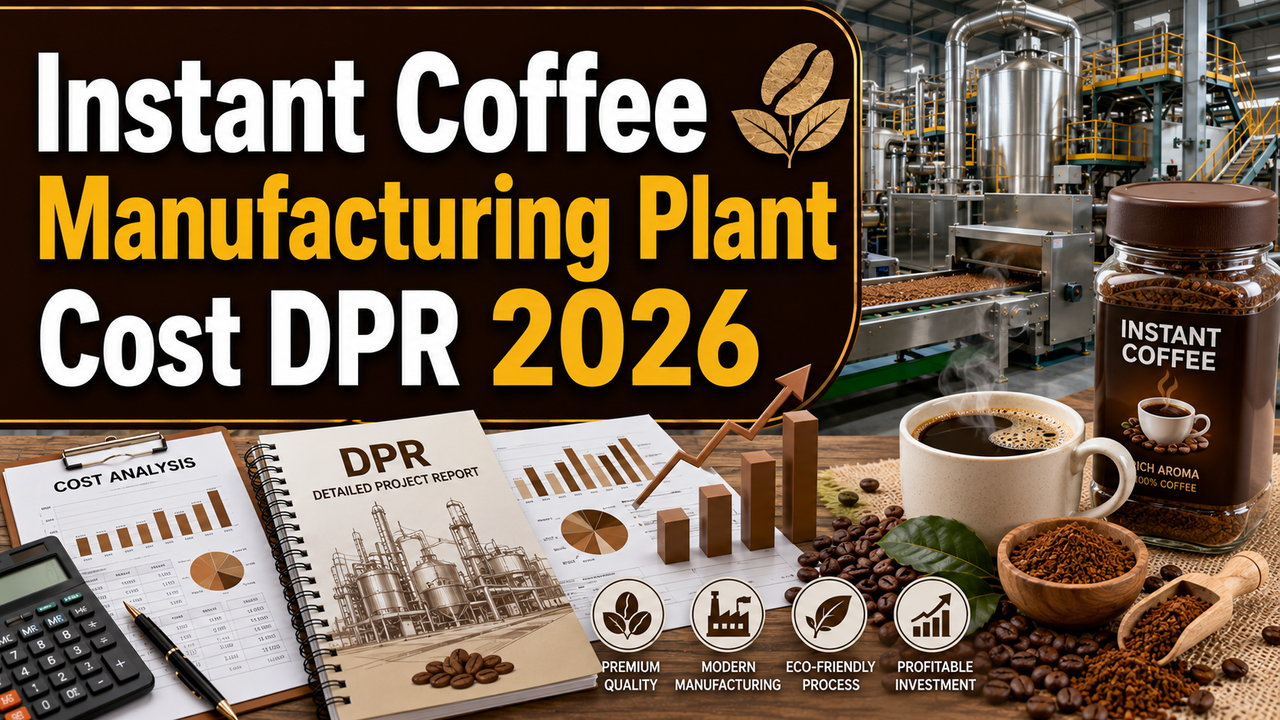
The instant coffee manufacturing industry is expected to witness stable growth through 2026, driven by rising global demand for convenient beverage solutions, growing urbanization, and increasing consumption of ready-to-drink and quick-serve coffee products across retail and foodservice channels. As café culture expands and consumers increasingly shift toward convenience-oriented beverages, instant coffee remains a critical product in homes, offices, vending machines, and institutional settings.
IMARC Group's report, titled "Instant Coffee Manufacturing Plant Project Report 2026: Industry Trends, Plant Setup, Machinery, Raw Materials, Investment Opportunities, Cost and Revenue," provides a complete roadmap for setting up an instant coffee manufacturing plant. It covers a comprehensive market overview to micro-level information such as unit operations involved, raw material requirements, utility requirements, infrastructure requirements, machinery and technology requirements, manpower requirements, packaging requirements, transportation requirements, etc.
Request for a Sample Report: https://www.imarcgroup.com/instant-coffee-manufacturing-plant-project-report/requestsample
Instant Coffee Industry Outlook 2026
The global instant coffee market was valued at USD 15.36 Billion in 2025 and is expected to reach USD 22.83 Billion by 2034, exhibiting a CAGR of 4.5% from 2026 to 2034. Changing consumer lifestyles, rising disposable incomes, and the expanding café culture are boosting demand for convenient coffee formats that require minimal preparation time. Instant coffee continues to gain traction due to its affordability, long shelf life, and compatibility with diverse consumption settings, including homes, offices, and travel environments.
Emerging markets in Asia-Pacific, particularly India, China, and Southeast Asia, are experiencing accelerated growth driven by urban population expansion and increasing acceptance of coffee as a daily beverage. Meanwhile, North America and Europe remain mature markets characterized by product premiumization, demand for freeze-dried variants, and clean-label formulations. Manufacturers are focusing on sustainable sourcing, recyclable packaging, and specialty-grade instant coffee to align with evolving consumer preferences.
For example, India ranks among the key global centers for instant coffee manufacturing and exports, with value-added products contributing close to 38% of total coffee shipments. The India-European Free Trade Association (EFTA) Trade and Economic Partnership Agreement (TEPA), effective from 1 October 2025, grants zero-duty access for Indian coffee exports to Switzerland, Norway, and Iceland, strengthening market access and creating new opportunities for premium, value-added Indian coffees, including roasted and instant varieties.
However, challenges such as green coffee bean price volatility, high initial capital investment for machinery and land, energy consumption concerns, and evolving food safety regulations may influence production costs and strategic investment decisions for new plant setups.
Key Insights for Setting Up an Instant Coffee Manufacturing Plant
Detailed Process Flow
- Product Overview
- Unit Operations Involved
- Mass Balance and Raw Material Requirements
- Quality Assurance Criteria
- Technical Tests
Project Details, Requirements and Costs Involved
- Land, Location and Site Development
- Plant Layout
- Machinery Requirements and Costs
- Raw Material Requirements and Costs
- Packaging Requirements and Costs
- Transportation Requirements and Costs
- Utility Requirements and Costs
- Human Resource Requirements and Costs
Capital Expenditure (CapEx) and Operational Expenditure (OpEx) Analysis
Project Economics
- Capital Investments
- Operating Costs
- Expenditure Projections
- Revenue Projections
- Taxation and Depreciation
- Profit Projections
- Financial Analysis
Profitability Analysis
- Total Income
- Total Expenditure
- Gross Profit
- Gross Margin
- Net Profit
- Net Margin
Key Cost Components
Raw Materials: The primary cost driver, including high-quality green coffee beans (Arabica, Robusta, or blends), water, and other additives or flavoring agents, which collectively account for approximately 70-80% of total operating expenses (OpEx).
Energy Costs: Instant coffee manufacturing is energy-intensive, especially during roasting, extraction, and drying stages, requiring significant amounts of electricity, steam, and natural gas or LPG for thermal operations.
Machinery and Equipment: Capital investment in coffee roasters, grinders, extractors, evaporators, spray or freeze dryers, agglomerators, and automated packaging systems, along with ongoing maintenance costs.
Labor: Includes salaries, training, and benefits for skilled and unskilled workers involved in plant operation, maintenance, and quality control throughout the production process.
Utilities: Costs for water, compressed air, cooling systems, steam generation, and other utilities essential for continuous, safe, and hygienic production in a food-grade facility.
Packaging and Transportation: Expenses related to primary packaging (jars, sachets, refill packs) and secondary packaging, along with distribution costs to wholesalers, retailers, or export markets.
Depreciation and Financing: Depreciation of fixed assets including roasters, dryers, and extractors, and interest or repayment obligations for loans or capital invested in plant setup.
Compliance and Safety: Investment in food safety systems, environmental compliance, quality laboratory equipment, certifications (e.g., FSSC 22000, ISO), and waste treatment or effluent management facilities.
Overheads: Administrative costs such as insurance, office operations, licensing, marketing, and general plant management contributing to total operating expense.
Economic Trends Influencing Instant Coffee Plant Setup Costs 2026
Green Coffee Bean Price Volatility: As green coffee beans are the primary raw material for instant coffee manufacturing, fluctuations in global coffee commodity prices (driven by weather events, crop yields, and supply chain disruptions) directly impact both capital and operating costs. Higher bean prices raise production expenses, making sourcing diversification and long-term supplier contracts more critical.
Carbon Pricing & Environmental Policies: Growing regulatory focus on greenhouse gas emissions and food processing waste increases costs related to wastewater treatment, dust control, and compliance systems. Stricter environmental rules around energy-intensive drying processes may elevate initial capital outlay for new plant setups.
Inflation & Interest Rates: Rising inflation inflates the cost of building materials, civil construction, labor, and machinery, while higher interest rates increase the cost of loans and financing needed for plant construction, equipment procurement, and commissioning of processing lines.
Government Subsidies & Stimulus: Policies supporting food processing, domestic manufacturing, and export promotion — especially in coffee-producing countries like India, Vietnam, and Brazil — can reduce setup costs through grants, low-interest loans, or tax incentives aimed at instant coffee plant investments.
Technological Advancements: Innovations in high-capacity freeze dryers, energy-efficient spray drying towers, automated agglomeration systems, and inline quality control can increase upfront CapEx but offer significant productivity gains, reduced material waste, and lower per-unit costs, enhancing long-term ROI.
Supply Chain Localization: Efforts to source green coffee beans domestically and reduce dependence on imports incentivize in-country investment in roasting and processing infrastructure. This improves supply chain resilience and reduces exposure to forex volatility while supporting premium product development.
Labor Market Considerations: Shortages in skilled labor for operating high-speed roasters, freeze dryers, and automated packaging lines can drive up wages or necessitate investment in operator training programs — raising both initial setup and ongoing operational expenses.
Speak to an Analyst for Customized Report: https://www.imarcgroup.com/request?type=report&id=7305&flag=C
How to Setup an Instant Coffee Manufacturing Plant?
Setting up an instant coffee manufacturing plant requires evaluating several key factors including technological requirements and quality assurance. Some of the critical considerations include:
Detailed Process Flow
The manufacturing process is a multi-step operation that involves several unit operations, material handling, and quality checks. The main stages involved in the instant coffee manufacturing process flow are:
- Roasting green coffee beans to develop flavor and aroma
- Grinding the roasted beans into a fine powder
- Extracting soluble coffee compounds using hot water under pressure
- Concentrating the extract via evaporation to remove excess water
- Drying the extract — spray drying or freeze drying — to produce powder or granules
- Agglomeration (optional) to improve solubility and texture
- Automated packaging into sachets, jars, or refill packs
Site Selection
The location must offer easy access to key raw materials such as green coffee beans and packaging materials (jars/sachets). Proximity to target markets will help minimize distribution costs. The site must have robust infrastructure, including reliable transportation, utilities, and waste management systems. Compliance with local zoning laws and food safety environmental regulations must also be ensured.
Plant Layout Optimization
The layout should be optimized to enhance workflow efficiency, hygiene, and safety, while minimizing material handling distances. Separate areas for raw material storage, roasting, extraction, drying, quality control, and finished goods storage must be designated. Space for future capacity expansion should be incorporated to accommodate business growth.
Equipment Selection
High-quality, food-grade machinery tailored for instant coffee production must be selected. Essential equipment includes:
- Coffee bean roasters (drum or fluidized bed)
- Industrial grinders and milling systems
- Extraction units (percolator columns or continuous extractors)
- Evaporators and centrifuges for concentration
- Spray dryers or freeze dryers
- Agglomeration towers
- Aroma recovery and re-addition systems
- Automated packaging machines (sachets, jars, bulk containers)
All machinery must comply with industry standards for safety, efficiency, and food-grade hygiene requirements.
Raw Material Sourcing
Reliable suppliers must be secured for green coffee beans (Arabica, Robusta, or blends) and packaging materials to ensure consistent production quality. Minimizing transportation costs by selecting nearby suppliers is essential. Sustainability and supply chain risks must be assessed, and long-term contracts should be negotiated to stabilize pricing and ensure a steady supply.
Safety and Environmental Compliance
Food safety protocols must be implemented throughout the manufacturing process. Advanced monitoring systems should be installed to detect deviations in roasting temperature, extraction pressure, and drying parameters. Effluent treatment systems for spent coffee grounds, wastewater, and process vapors are necessary to minimize environmental impact and ensure regulatory compliance.
Quality Assurance Systems
A comprehensive quality control system should be established throughout production. Analytical instruments must be used to monitor product moisture content, solubility, color, granule size, and aroma. Documentation for traceability and regulatory compliance — including certifications such as FSSC 22000, ISO 9001, and Rainforest Alliance — must be maintained.
Challenges and Considerations for Investors
Coffee Bean Price Volatility: Instant coffee manufacturing heavily depends on green coffee beans whose prices are influenced by climate change, El Niño weather events, geopolitical disruptions, and currency fluctuations. Price swings can significantly impact production costs and profit margins.
High Capital Intensity: Establishing an instant coffee plant requires substantial investment in freeze dryers, spray drying towers, aroma recovery systems, and automated packaging lines. Long payback periods can deter risk-averse investors, particularly for freeze-dried premium lines.
Environmental Compliance: Stringent regulations on effluent discharge (spent coffee grounds, wastewater), energy consumption, and packaging waste require additional investment in pollution control technologies and sustainable practices.
Market Competition: The global instant coffee market is dominated by multinational players such as Nestlé, JDE Peet's, and Tata Consumer Products. New entrants must focus on operational efficiency, niche product differentiation (e.g., organic, single-origin, specialty freeze-dried), or private-label manufacturing to remain competitive.
Logistics and Distribution: Maintaining consistent quality during storage and transportation — especially for hygroscopic powder or granule products — requires specialized packaging and climate-controlled logistics infrastructure. Poor distribution management can lead to quality deterioration and increased costs.
Technological Barriers: Staying competitive requires adopting advanced, energy-efficient freeze drying and spray drying technologies. Outdated systems lead to higher energy consumption, lower product quality, and greater environmental impact.
Policy and Regulatory Risks: Changes in coffee export policies, import tariffs, food safety standards, or packaging regulations in key markets can alter competitive dynamics and affect investment outcomes.
Skilled Labor Availability: Operating high-precision roasters, freeze dryers, and extraction systems requires qualified food technologists and process engineers. Talent shortages in certain regions may require investment in workforce training programs.
Leading Instant Coffee Manufacturers
Leading manufacturers in the global instant coffee industry include several multinational companies with extensive production capacities and diverse application portfolios. Key players include:
- Nestlé
- Starbucks Corporation
- Matthew Algie & Company Ltd.
- Kraft Foods Inc.
- Tata Consumer Products Limited
- Strauss Group Ltd.
- Jacobs Douwe Egberts
- Tchibo Coffee International Ltd.
All of which serve end-use sectors such as food and beverages, FMCG, hospitality, and institutional catering.
Detailed Report Coverage Includes:
- Detailed Process Flow: Unit Operations, Quality Assurance Criteria, Technical Tests, Mass Balance, Raw Material Requirements
- Land, Location and Site Development: Selection Criteria, Location Analysis, Project Planning, Environmental Impact, Land Costs
- Plant Layout: Importance, Layout Design, Factors Influencing Layout
- Plant Machinery: Requirements, Costs, Suppliers (on request)
- Raw Materials: Requirements, Details, Procurement, Costs, Suppliers (on request)
- Packaging: Requirements, Material Details, Procurement, Costs
- Other Requirements: Transportation, Utility, Energy, Water, Human Resource Costs
- Project Economics: Capital Costs, Techno-Economic Parameters, Income & Expenditure Projections, Pricing, Taxation, Depreciation
- Financial Analysis: Liquidity Analysis, Profitability Analysis, Payback Period, NPV, IRR, Sensitivity Analysis, Economic Analysis
- Other Analysis: Market Trends, Market Segmentation, Regional Breakup, Price Trends, Competitive Landscape, Regulatory Landscape, Strategic Recommendations
Frequently Asked Questions
1. How much capital is required to start an instant coffee manufacturing plant?
Capital requirements generally include land acquisition, construction, equipment procurement, installation, pre-operative expenses, and initial working capital. The total amount varies with capacity, technology, and location.
2. What raw materials are required for instant coffee production?
The main raw materials include high-quality coffee beans (Arabica, Robusta, or a blend), water, and other additives or flavoring agents depending on the product type (e.g., freeze-dried, spray-dried, or agglomerated instant coffee).
3. What machinery and equipment are required to start an instant coffee factory?
The instant coffee factory typically requires coffee bean roasters, grinders, extraction units, centrifuges, evaporators, freeze dryers or spray dryers, and packaging machines. Aroma recovery units and quality control labs are also important.
4. How long does it take to start an instant coffee manufacturing plant?
Usually, the timeline can range from 12 to 18 months to start an instant coffee manufacturing plant, depending on plant size, machinery installation, and regulatory approvals.
5. What licenses and approvals are needed to start an instant coffee factory?
Typical requirements include business registration, environmental clearances, factory licenses, fire safety certifications, FSSAI (or local food authority) approvals, and industry-specific permits. Local/state/national regulations may apply depending on the location.
6. Is instant coffee manufacturing a profitable business?
Profitability depends on several factors including market demand, production efficiency, pricing strategy, raw material cost management, and operational scale. Profit margins usually improve with capacity expansion and increased capacity utilization rates. Gross margins typically range from 30–40% and net margins from 12–20%.
7. How long does it take to break even in an instant coffee manufacturing business?
Break even in an instant coffee manufacturing business typically ranges from 3 to 5 years, depending on production scale, export potential, and brand positioning. Efficient processing and premium product lines can help accelerate returns.
8. Are there any government subsidies or incentives for instant coffee manufacturing?
Governments may offer incentives such as capital subsidies, tax exemptions, reduced utility tariffs, export benefits, or interest subsidies to promote manufacturing under various national or regional industrial policies.
About Us
IMARC Group is a global management consulting firm that helps the world's most ambitious changemakers to create a lasting impact. The company excels in understanding its clients' business priorities and delivering tailored solutions that drive meaningful outcomes. We provide a comprehensive suite of market entry and expansion services. Our offerings include thorough market assessment, feasibility studies, company incorporation assistance, factory setup support, regulatory approvals and licensing navigation, branding, marketing and sales strategies, competitive landscape and benchmarking analyses, pricing and cost research, and procurement research.
Contact Us:
IMARC Group
134 N 4th St. Brooklyn, NY 11249, USA
Email: sales@imarcgroup.com
Tel No: (D) +91 120 433 0800
United States: +1-631-791-1145


